
PRESSKIT DE MEELFABRIEK
INTRODUCTION
De Meelfabriek in Leiden is an extensive redevelopment project. The ten national monuments are being revitalized and complemented with striking new constructions. The buildings will provide spaces for living, working, shopping and, above all, gathering and relaxing. With lofts, apartments and student housing, along with a hotel, restaurant, sports & wellness facilities, offices, shops and areas for art and culture, it will become a vibrant hub in the city. A unique place where industrial heritage is intertwined with a contemporary lifestyle. A meeting point for residents and visitors, locals and tourists. A place that embodies both the history and the future of the city.
In the initial phase (2002–2013), Swiss architect Peter Zumthor designed the master plan “Back to the Bones” for De Meelfabriek. Since 2015, Studio Akkerhuis has been working on the development of a renewed master plan and is responsible for the architecture of this impressive complex. Piet Oudolf made the design for the garden. LOLA Landscape Architects designed the landscape to connect and invite exploration. Van der Wiel Bouw, along with trusted subcontractors and suppliers, ensures the project’s execution.
For additional press, media or PR questions about De Meelfabriek,
please contact Patty Beuk.
ARCHITECTURE
A groundbreaking total design including transformation, new constructions, garden, and landscape architecture.
CONCEPT DE MEELFABRIEK
Shaping De Meelfabriek goes beyond architectural drawings. It begins with a vision and takes form in a masterplan, in which the passion and conviction underlying that vision remain tangible. At its core, De Meelfabriek is built around the values of encounter and connection, aspiring to become a new hub for the city and its surroundings.
Read more >
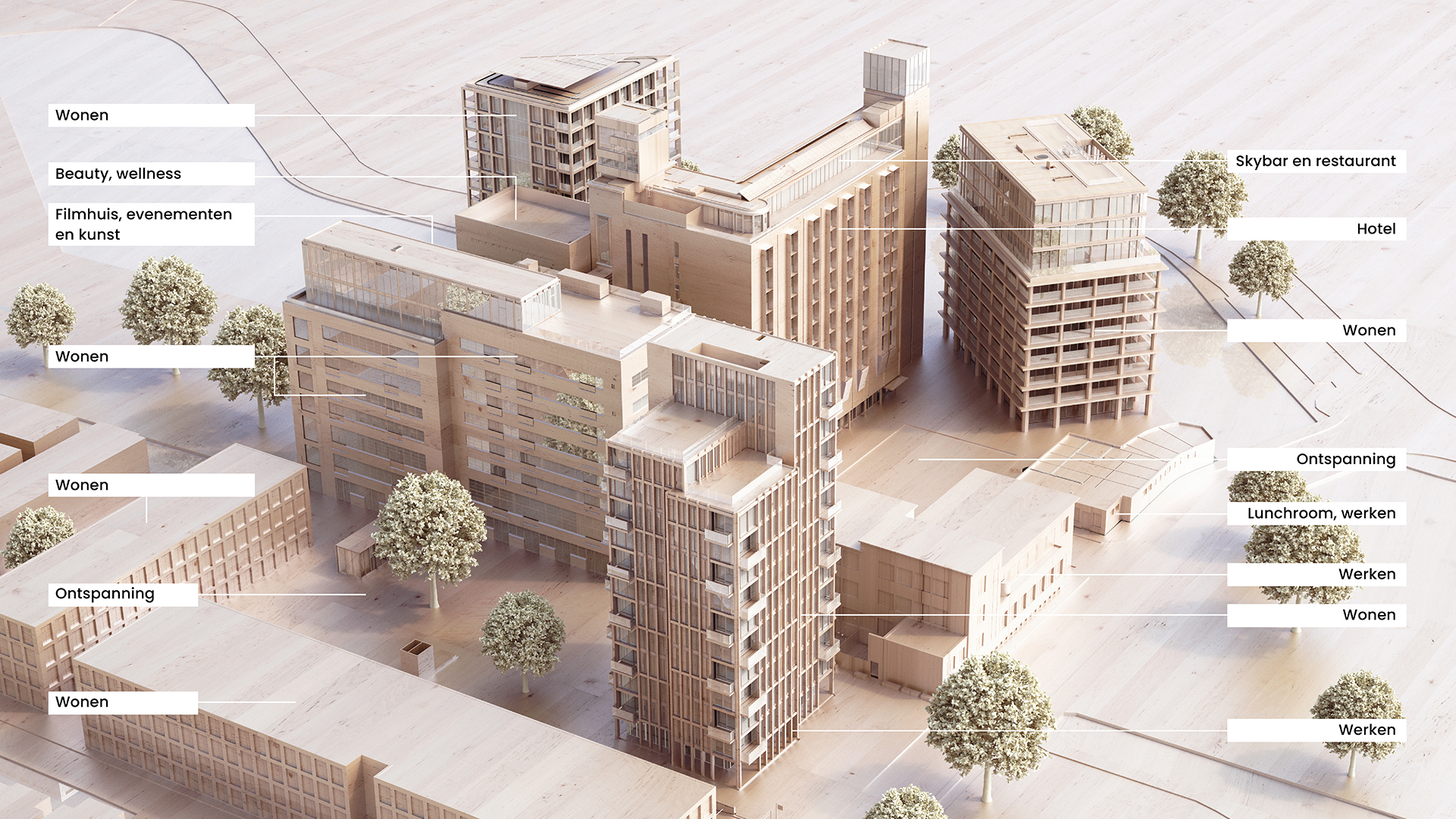
All new functions within the project are designed to encourage interaction and connection, both commercial and non-commercial. Today’s highly individualised ways of living and working call for spaces that bring people together. A vibrant city provides such places, and De Meelfabriek aims to be one of these key meeting points.
FACTS
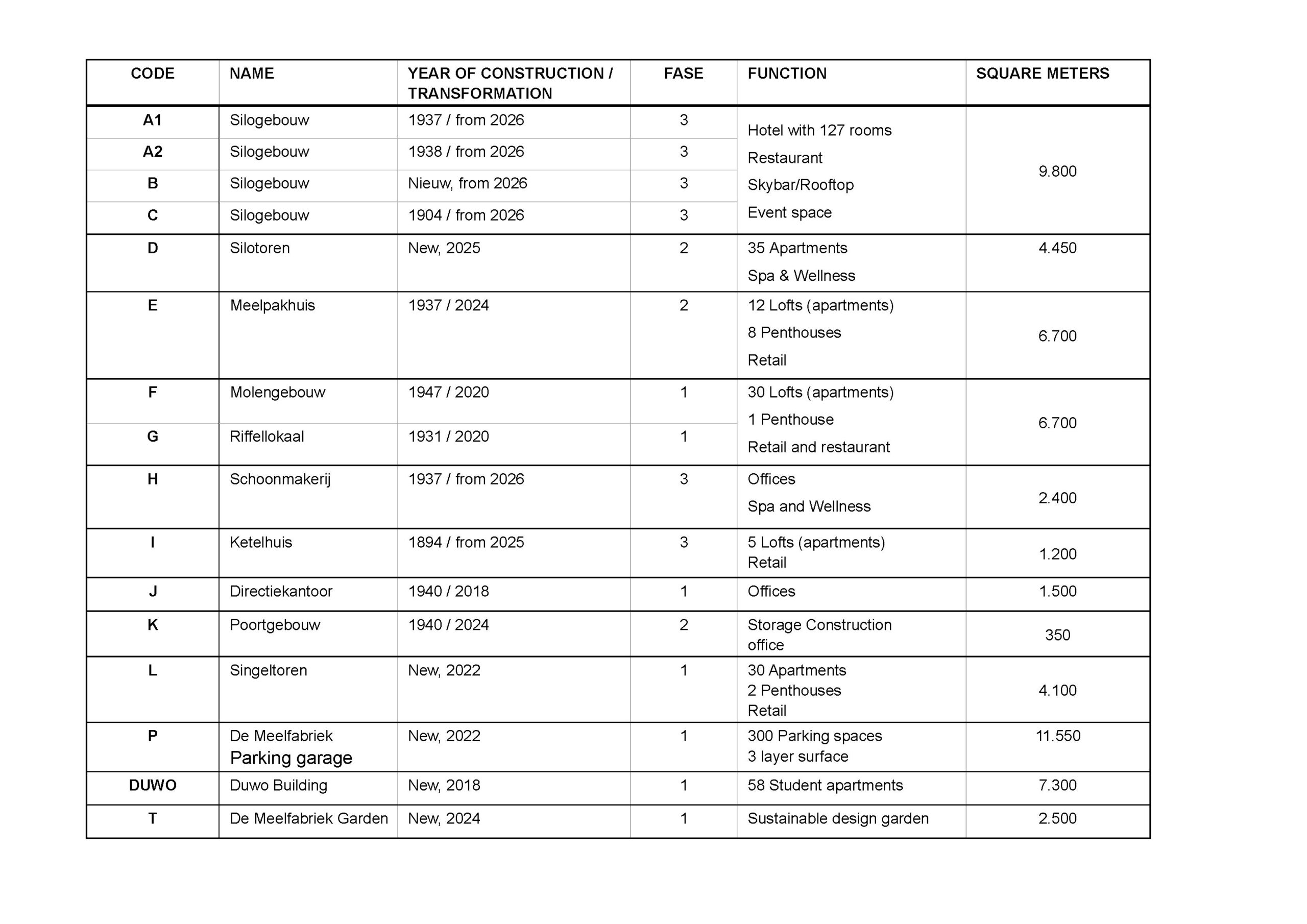
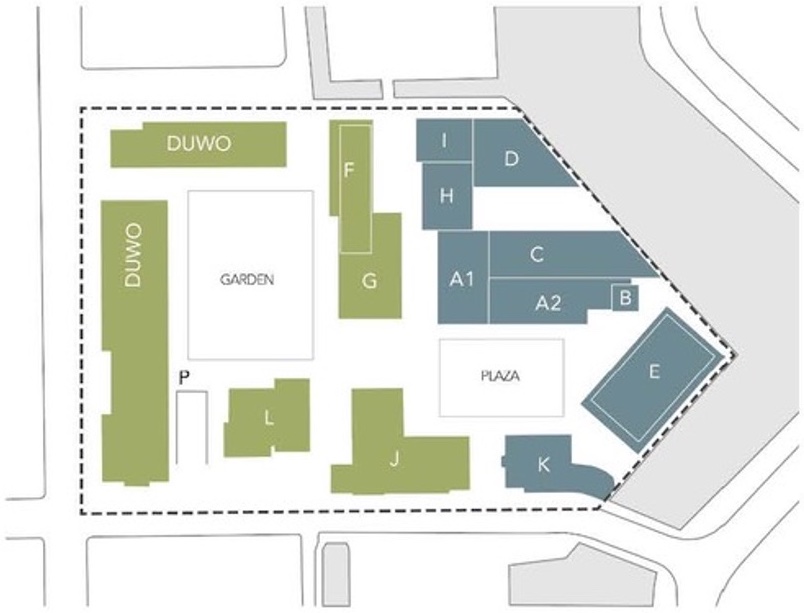
All key information about the buildings of De Meelfabriek at a glance. Click on the image to enlarge.
PEOPLE
It is the people behind De Meelfabriek who are transforming it into a truly unique destination. They make the difference, from designers to construction workers, residents, tenants, visitors and many others involved in the project. We would like to introduce some of the key figures behind De Meelfabriek.
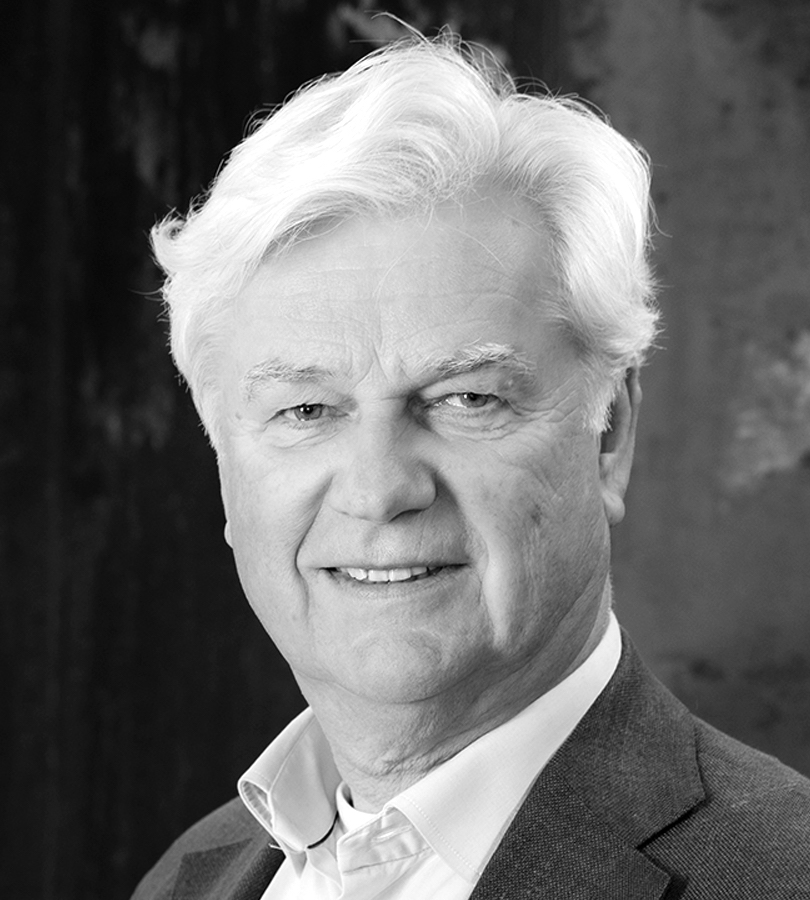
Ab van der Wiel was inspired by the adaptive reuse of raw industrial buildings during a visit to New York’s Meatpacking District in the early 1980s. When he learned of the impending closure of the flour mill in his hometown of Leiden, he immediately recognised the potential of this remarkable industrial complex.
That potential was formally acknowledged in 2001, when ten of the buildings were designated national heritage monuments. Architect Peter Zumthor established the guiding principle of “back to the bones” for the transformation masterplan. Each building was carefully assessed to determine which elements defined its historic significance, how these qualities could be strengthened and which parts could be adapted or removed to enable a sustainable future. In 2015, Studio Akkerhuis Architects was appointed to further develop the masterplan. Together with LOLA Landscape Architects and Piet Oudolf, the team continues to bring the site to life. Studio Akkerhuis remains the lead architect for De Meelfabriek.
They translate Ab van der Wiel’s vision into a future-focused and sustainable plan. The strength of the project lies in setting ambitious goals and pursuing them through a compact team with short lines of communication. Ab van der Wiel is both developer and owner of De Meelfabriek, as well as owner of the construction company involved in its realisation. Long-standing relationships with architects, contractors and suppliers contribute to the continuity of the project. De Meelfabriek is being developed as an inclusive piece of city, with space for residents, neighbours and visitors alike. Its transformation combines urban densification with the creation of an exceptional urban environment.
Ab van der Wiel was appointed Officer in the Order of Orange-Nassau in recognition of, among other achievements, the transformation of De Meelfabriek and his broader commitment to the restoration and adaptive reuse of industrial heritage.
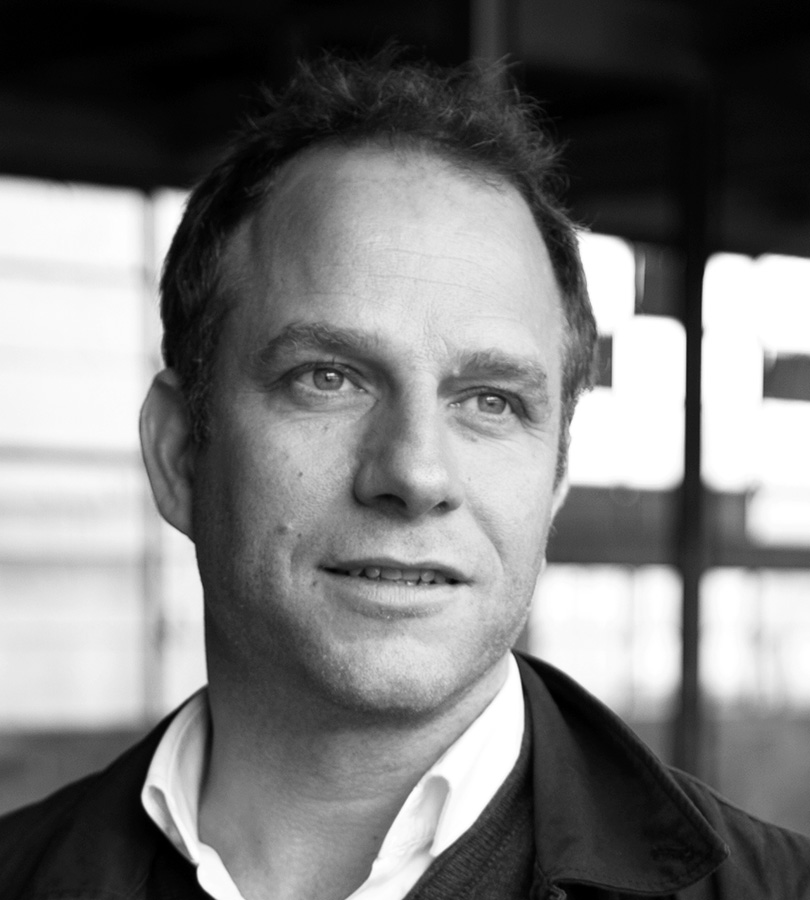
Bart Akkerhuis is architect and founder of Studio Akkerhuis Architects, an architecture and design practice based in Paris. The studio’s team of 35 architects from 15 different countries forms a close-knit and collaborative group, united by a shared passion for architecture and design. Since its establishment in September 2014, the practice has grown rapidly and works internationally on a diverse range of high-profile projects. Its portfolio ranges from small-scale installations – such as a temporary 250-seat theatre constructed from bamboo – to Google’s headquarters in Paris and the transformation of De Meelfabriek in Leiden.
The studio is dedicated to creativity and originality while recognising the practical requirements involved in delivering architectural and design projects. It works across every stage of the design process, from concept design through to construction supervision. In close collaboration with clients and consultants, the team pays particular attention to detail and the development of bespoke solutions through a genuinely collaborative design process.
In 2016, the studio received the Design Vanguard Award from Architectural Record. It was also recognised at the prestigious World Architecture Festival Awards in 2019 and 2025 and received the Jury Prize at the Rijnlandse Architecture Prize in 2023. Bart Akkerhuis is a former partner at Renzo Piano Building Workshop. Studio Akkerhuis continues to collaborate with Renzo Piano Building Workshop on projects in Paris, Toronto and Monaco.

LOLA Landscape Architects is a practice dedicated to forward-thinking landscape architecture. It researches and designs spatial transformations within existing cultural landscapes. Through carefully considered ideas and targeted interventions, LOLA (LOst LAndscapes) seeks to transform these environments into beautiful, healthy and sustainable places. Creating unique experiences plays a central role in its work: landscapes that invite people to wander, discover, be surprised, enjoy and dream. The practice works on major landscape projects around the world, including the Singelpark in Leiden. Peter Veenstra regularly collaborates with Piet Oudolf on projects, including De Meelfabriek.
LOLA has received numerous awards, including the Young Maaskant Prize for Architecture and the Topas Landscape Award. In 2025, the design for De Meelfabriek Tuin was recognised by the Architecture MasterPrize, the World Landscape Architecture Awards and the Dezeen Awards, where it was respectively awarded Best of Best, Nominated and Longlisted.

Piet Oudolf is widely regarded as the Netherlands’ most renowned landscape designer. His gardens and parks enjoy international acclaim, including celebrated projects such as the High Line in New York and Millennium Park in Chicago. He lives and works in Hummelo, in the province of Gelderland, together with his wife Anja. Oudolf is a leading representative of The Dutch Wave, a movement in landscape design inspired by natural plant communities, art and the passage of time through the seasons. He has received numerous honours, including the Prince Bernhard Culture Fund Award and the Maaskant Prize and was appointed Officer in the Order of Orange-Nassau. In his distinctive style, Oudolf designed De Meelfabriek Tuin.

PLEASED TO MEET YOU:
DE MEELFABRIEK
What were the original purposes of the buildings on De Meelfabriek site?
What are their new functions nowadays? Here’s an introduction to 10 unique components of the complex.

MEELPAKHUIS, National Monument
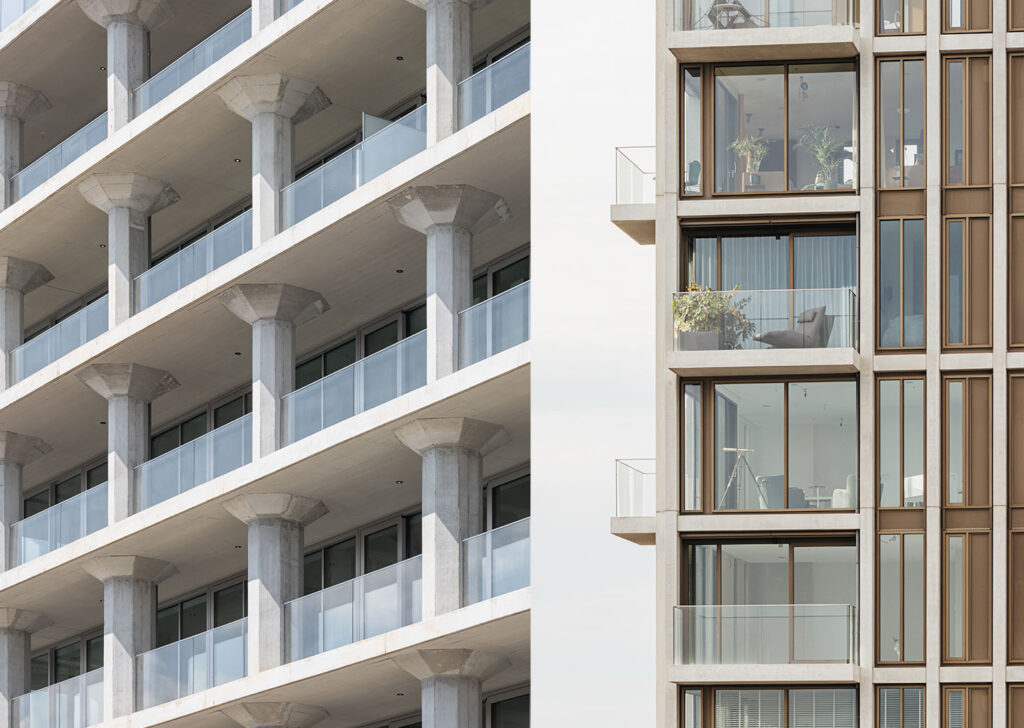
This functional design with concrete mushroom columns was originally used to store large quantities of flour. Replacing the original brick facade with a recessed glass facade has revealed the rhythmic structure of the columns. The columns are narrower at the top, where less load-bearing capacity was required. The sturdy base allowed the addition of three new floors. The monumental double-helix structure, originally designed to slide sacks of flour between floors, serves as the focal point of the private staircase. The ground floor will soon house an innovative commercial and cultural concept. Numerous ingenious sustainability measures were applied during the transformation.
Year built: 1937 / Transformation: started 2021, completion 2024
Architect: B. Buurman / Transformation architect: Studio Akkerhuis Architects

SINGELTOREN
This newly built, slender residential tower, 45 meters high, comprises 30 apartments and 2 penthouses. The diverse composition of the three interconnected towers of varying heights integrates seamlessly with the surroundings: Oosterkerkstraat, De Meelfabriek garden and square, and the Singel. The segmentation gives the Singeltoren an elegant appearance, subtly enhancing the skyline. The clean detailing of concrete, glass, and aluminum, combined with floor-to-ceiling windows offering stunning views, perfectly complements De Meelfabriek’s industrial character. High-quality glass insulation ensures low energy use and excellent soundproofing, while its own geothermal sources provide sustainable energy. The ground floor includes the entrance to the parking garage and Barthen Keuken Design Center.
Completion: 2022
Architect: Studio Akkerhuis Architects

SILOTOREN
The new Silotoren marks the edge of De Meelfabriek site, standing near the Zijlsingel and Ankerpark, above the City Spa. The wellness center occupies the base of the building, connected to the restored Schoonmakerij. The apartments offer breathtaking views of Leiden. This new icon among the historic buildings features 12 residential floors with 33 apartments and 2 penthouses. Its architecture, in form and material, reflects the robust industrial character of the historic buildings and nods to the silo structure that once stood here.
Completion: 2025
Architect: Studio Akkerhuis Architects
MOLENGEBOUW & RIFFELLOKAAL, National Monument
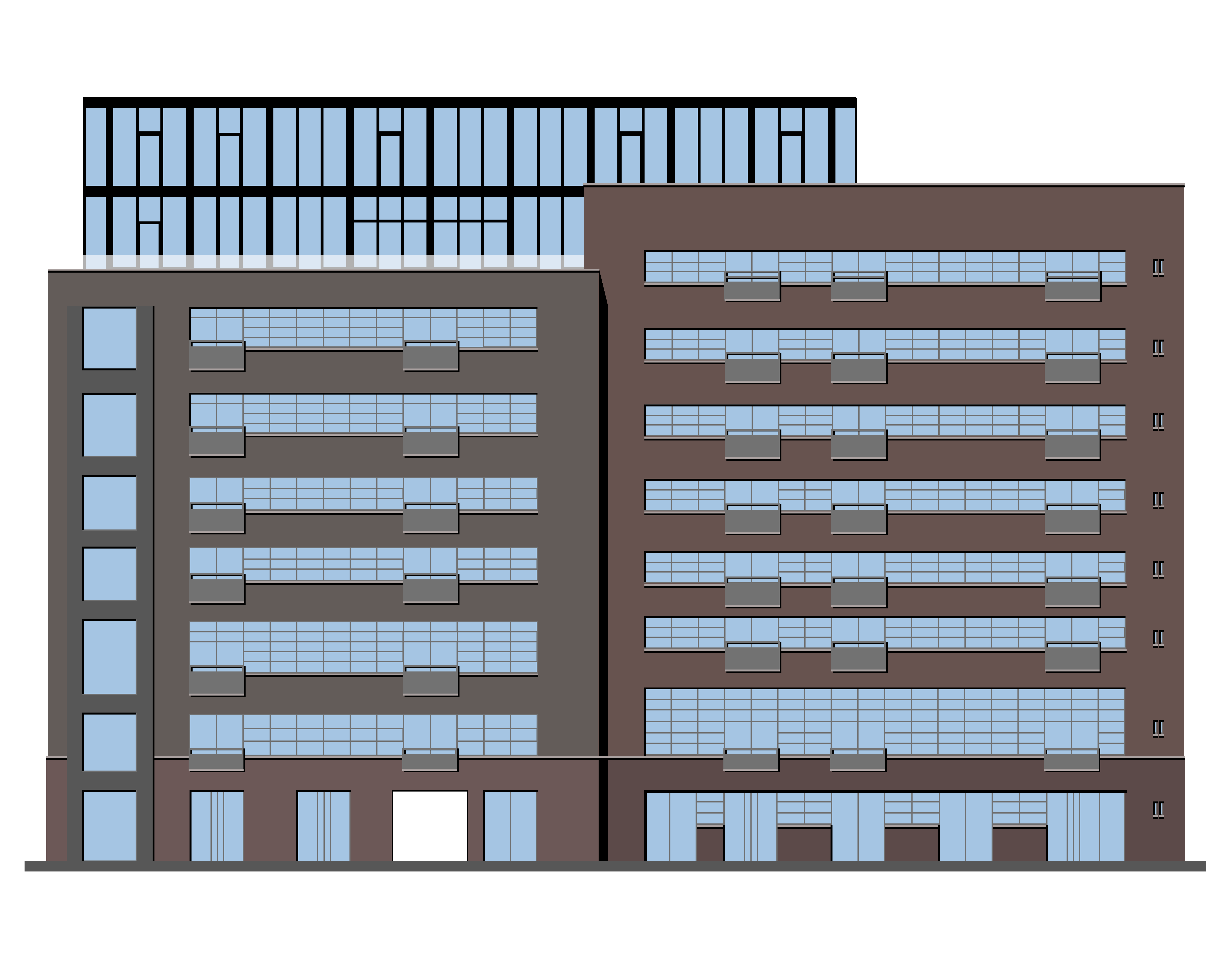
These buildings once housed machines for milling grain and sharpening grooves into millstones. Built for functionality and flexibility in the Nieuwe Bouwen style, their industrial character was central to their transformation. The original facade with specific window patterns, steel framework and wooden ceilings has been carefully restored and remains highly visible. The modernization created energy-efficient, luxurious loft apartments. A newly added penthouse links the Molengebouw and Riffellokaal with a striking steel-and-glass construction. The ground floor accommodates De Fysiospecialist, Nalu Collectiv hair Salon, Grutsk coffee bar, Cadeau Lokaal and Atelier Kleurstof.
Year built: 1931 & 1947 / Transformation: 2020
Architect: B. Buurman / Transformation architect: Studio Akkerhuis Architects
DIRECTIEKANTOOR, National Monument
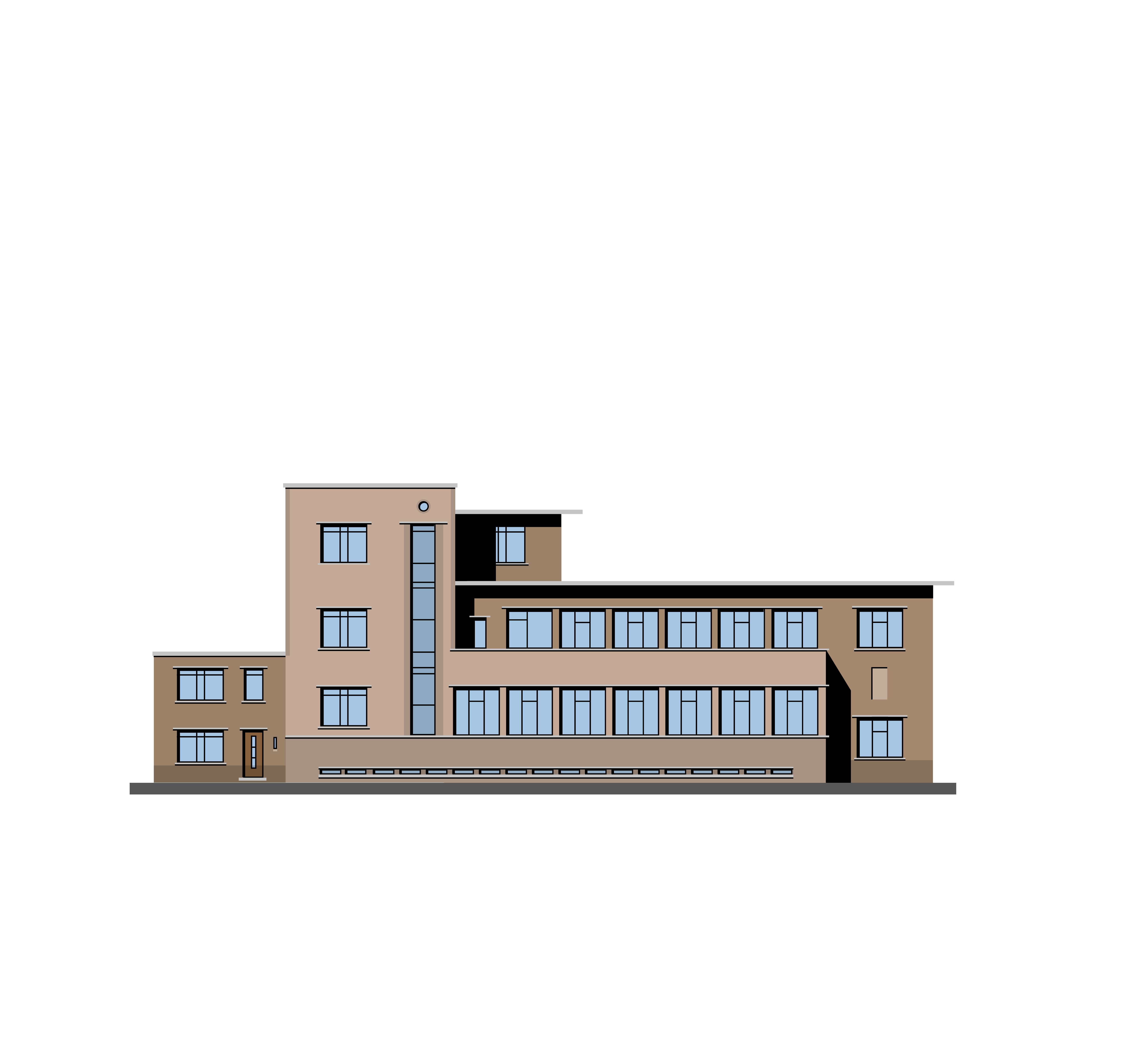
This building once served as the headquarters for management, administration, a laboratory and a test bakery. Its many original features evoke its rich history, such as the authentic Leiden keys above the front door, symbolic of the company that was renamed “Meelfabriek De Sleutels” (keys) in the 1920s. A facade stone from a 1734 windmill called “De Oranjeboom” remains intact. Combining historic elements with modern office facilities and sustainable features, the building now hosts tenants like Graphic Design and Photography, NPK Design, OWN Agency, As I-Search, VVKH Architecten, Rimadesio, Energiek Leiden and Psychologenpraktijk Krediet.
Year built: 1940 / Transformation: 2018
Architect: B. Buurman
KETELHUIS, National Monument
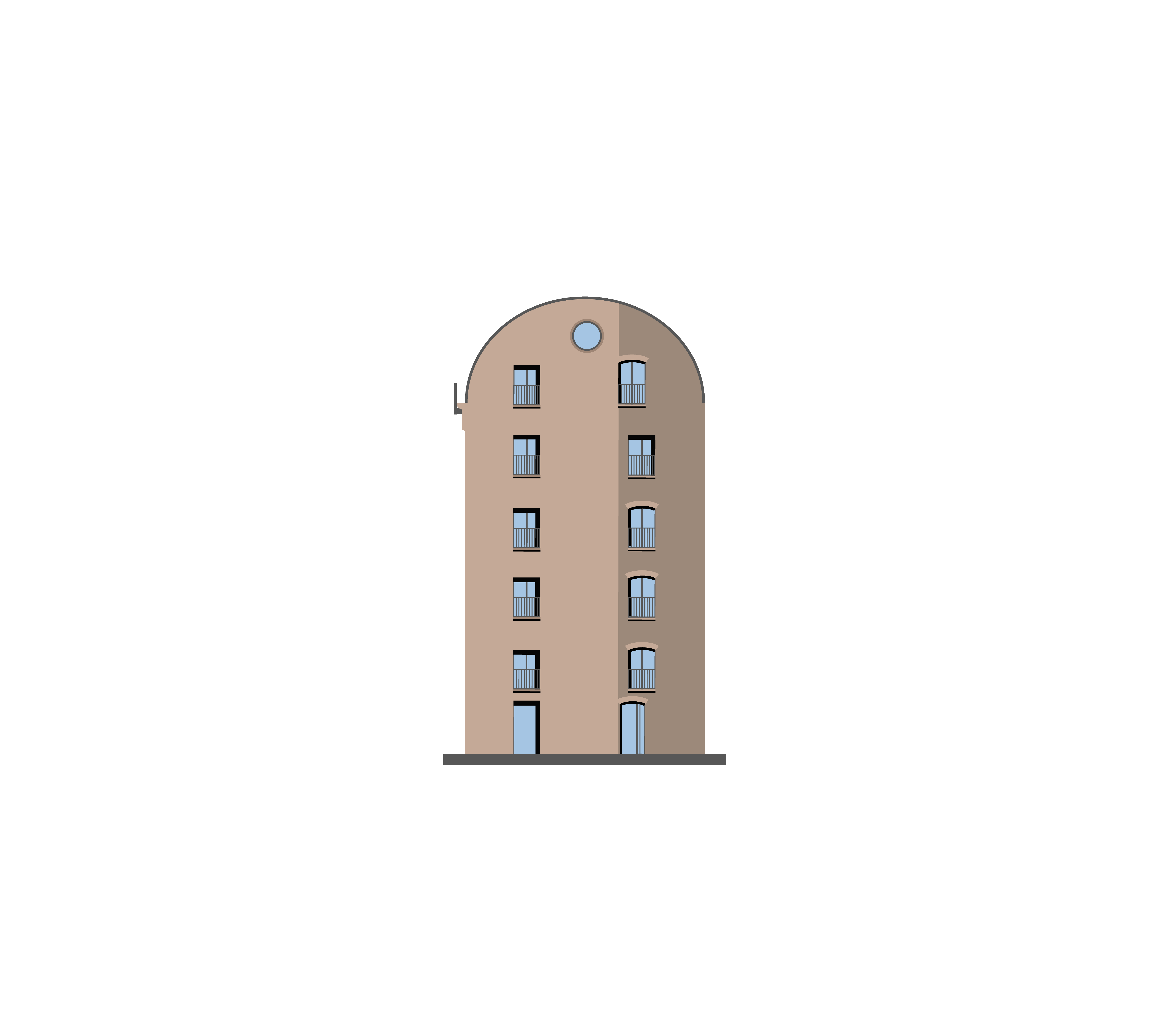
The oldest building in De Meelfabriek, dating back to 1894, this structure was initially designed as a flour warehouse. It is a fine example of utility architecture with notable detailing, including the use of concrete and iron. Its elegant cast-iron columns and rounded roof make it unique. Now entering a new phase, the Ketelhuis is being converted into residential units with commercial space on the ground floor.
Year built: 1894 / Transformation: starting in 2025
Architect: W.C. Mulder / Transformation architect: Studio Akkerhuis Architects
SCHOONMAKERIJ, National Monument

Once used for washing grain, this building combines the styles of Nieuwe Bouwen and Functionalist Expressionism. Its brick facade features long lines of steel windows. The free-standing reinforced concrete skeleton, rare in factory buildings at the time, sets the tone for the atmosphere of future spaces. The ground floor, will house a City Spa. The wellness center connects seamlessly with the adjacent new Silotoren.
Year built: 1937 / Transformation: starting in 2026
Architect: B. Buurman / Transformation architect: Studio Akkerhuis Architects
SILO BUILDINGS, National Monument

These three buildings, used for flour storage, are distinguished by their features, including a whitewashed stepped gable on the oldest structure. On the ground floor, striking concrete columns and funnels dominate the space. The concrete cell structure is being repurposed into unique rooms and short-stay apartments. The square rooftop structure, with its distinctive S-shaped timber cladding at 59 meters high, will become an impressive suite. Hotel De Meelfabriek will be a vibrant meeting place for business and leisure, from breakfast to drinks, dinner and overnight stays.
Year built: 1904, 1937, 1938 / Transformation: starting in 2026
Architect: W.C. Mulder + B. Buurman / Transformation architect: Studio Akkerhuis Architects
POORTGEBOUW, National Monument

Once slated for demolition, the Poortgebouw (gatehouse) has become a cherished feature of De Meelfabriek and is now a national monument. Originally a bicycle storage and garage for company cars, it has been restored for reuse. Though the interior had already lost its original state, it now offers space for storage and transformers at the rear. The front temporarily houses construction supervisors and staff.
Year built: 1940 / Transformation: 2026
Architect: B. Buurman / Transformation architect: Studio Akkerhuis Architects
DUWO-GEBOUW

This building comprises two residential blocks with 58 luxury student apartments and an underground parking garage. Built for DUWO, a specialist in student housing, the apartments offer views of either the Waardgracht, Looiersplein, or De Meelfabriek garden. The choice of finishes, colors, and materials makes it far from an ordinary student complex. The use of corten steel on the gable ends, balcony railings, and connecting bridges lends the building a warm, robust appearance. Combined with brickwork and recessed dark anodized aluminum window frames, it integrates perfectly into De Meelfabriek’s redevelopment.
Completion: 2018
Architect: Splinter
ARCHITECTURE
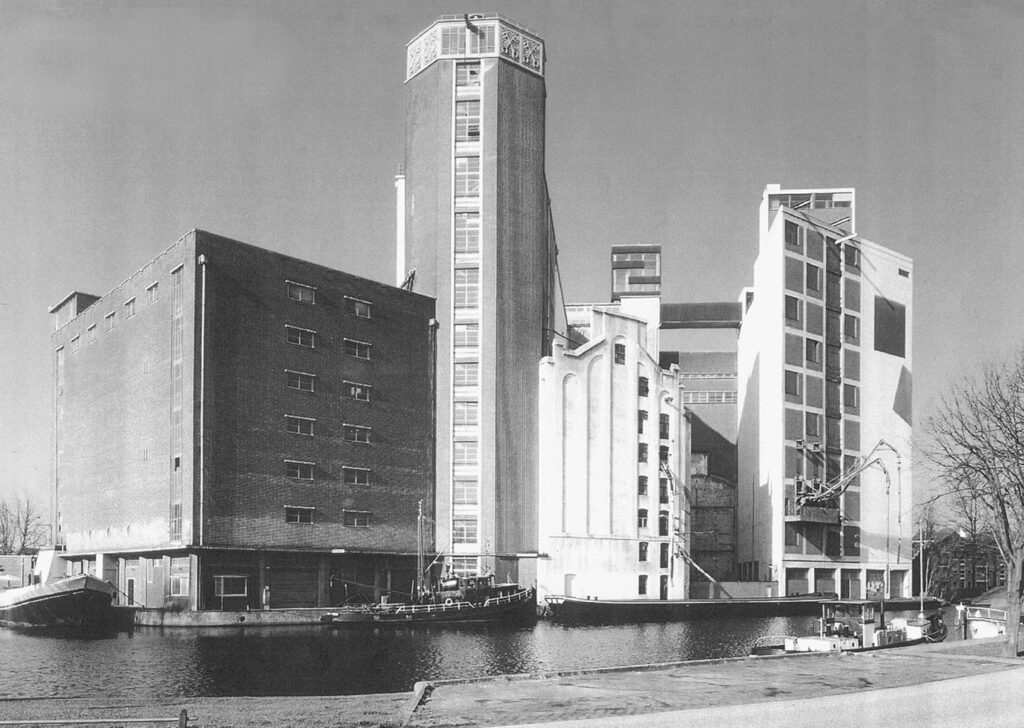
A striking comprehensive design featuring transformations, new constructions, garden and landscape architecture.
HISTORY
De Meelfabriek was established in 1884 and ceased operations in 1988. Over its history, the complex continuously evolved. Until the 1970s, several buildings were demolished, modified, or expanded. The various structures differed significantly in design and materials, serving as a showcase for 20th-century industrial building typologies. The complex consists of buildings with diverse architectural styles, materials and details, reflecting their original industrial functions. In 2000, the heritage value of these buildings was recognized when ten of them were designated as national monuments.
The oldest remaining structures date back to 1894 and 1907, designed by the Leiden-based architect W.C. Mulder. Notably, the 1907 silo building is one of the earliest large-scale reinforced concrete structures in the Netherlands. Between 1937 and 1947, architect Buurman designed additional buildings, including a milling building, storage warehouse, grain cleaning building, two silo buildings, a service residence and an office-laboratory. In 1948, M.P. Schutte joined the architecture firm of Mulder and Buurman, overseeing modifications and expansions during the 1950s.
TRANSFORMATION AND NEW CONSTRUCTION
Studio Akkerhuis Architects (SAA) was commissioned in 2015 to work on the development plan secured by Swiss architect Peter Zumthor. After thorough analysis, the team carefully considered what defines the site’s monumental status, determining which elements needed preservation, enhancement, or modification. Selective demolition and innovative additions were incorporated to support sustainable transformation while reinforcing the site’s overall character.
The new constructions harmonize with the architectural values of the national monuments through their materiality and techniques. Structural elements are placed on the exterior to maximize internal flexibility. Innovative solutions ensure both design quality and comfort. For instance, in the Meelpakhuis building, the original concrete ceiling seamlessly extends from the interior to the exterior, made possible by precise insulation and heating solutions that prevent thermal bridging.
Landscape
LOLA Landscape Architects and garden designer Piet Oudolf, together with Studio Akkerhuis Architects (SAA), are bringing the site to life. De Meelfabriek is being transformed into an accessible mixed-use destination where residents and visitors can experience a remarkable diversity of urban and architectural spaces. The project combines industrial heritage with contemporary living and provides space for living, working and leisure. Great attention is given to detail, spatial quality and a programme that balances everyday functions with unique experiences. The core values of connection and encounter have been translated into a new destination for the city and its surrounding communities.
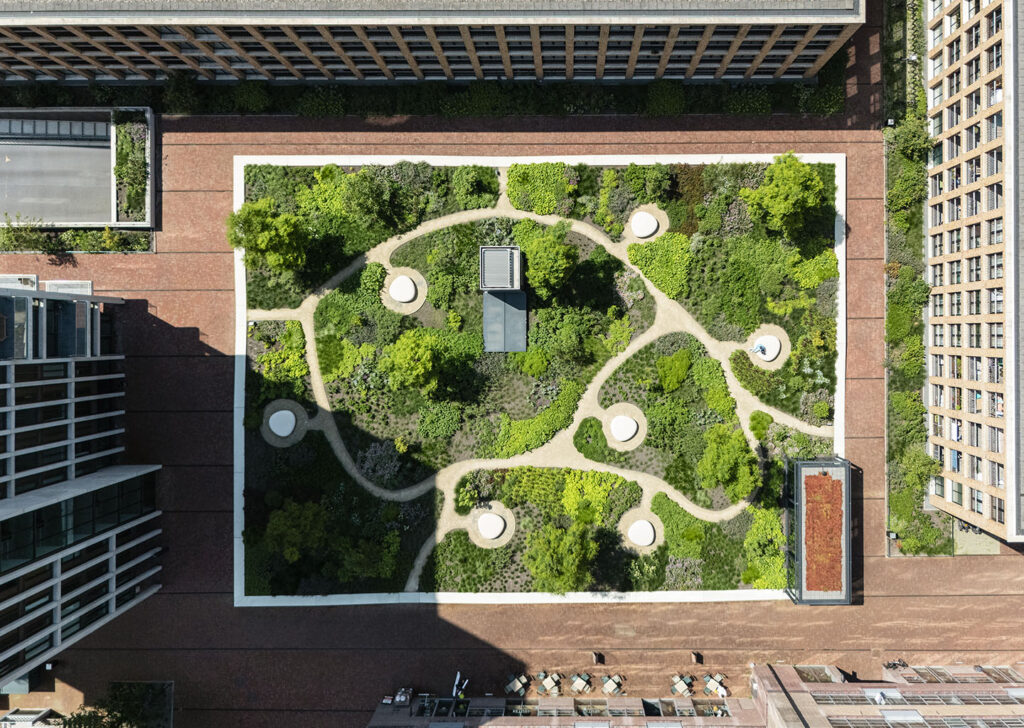
The site is organised around two central framed spaces: De Meelfabriek Tuin and Meelfabriek Plein. Located at the heart of De Meelfabriek, the Plein will become a vibrant and lively gathering place. The Tuin, by contrast, is designed as a tranquil setting for wandering and quiet reflection. The changing seasons play a central role in the experience of the garden, with each season revealing new colours, textures and forms. Both the Plein and the Tuin are defined by a similar concrete edge, functioning almost as a picture frame. Around the Tuin, this edge is partially raised to provide informal seating, while at the Plein it remains flush with the surrounding surface. A brick-paved landscape connects all buildings through a rhythmic drainage channel. In addition to its visual qualities, this system contributes to rainwater retention. Rainwater collected around the Tuin is directed into an underground water-storage system, from which the garden can draw during drier periods.
De Meelfabriek site forms part of the Singelpark, a 6.5-kilometre park for which LOLA developed the masterplan. The Tuin was completed in 2023 and is open to everyone. The Plein is currently still under development.
STATUS AS OF 2026
A significant part of De Meelfabriek has already been completed, including the western section of the public realm with the Tuin, the student housing buildings, the underground car park, Molengebouw, Riffellokaal, Directiekantoor, Singeltoren, Meelpakhuis and Silotoren. Other buildings, including Ketelhuis, Schoonmakerij and the Silogebouwen, which will house the hotel, are still under development.
OUR FUNDS



We are grateful for the collaboration with our loyal partners;
Nationaal Restauratie Fonds, Rijksdienst voor het Cultureel Erfgoed, Provincie Zuid-Holland
TIMELINE
May 1, 1884: The official founding of the company De Koster & Co. by miller Adriaan Jacob Koole and grain merchant Arie de Koster Sr. Together, they establish an exceptionally modern factory for its time at the Zijlsingel in Leiden. Architect W.C. Mulder is commissioned for the design. In 1886, Koole passes away, and Koster continues alone.
1891: A severe fire destroys the mill building. Koster doesn’t give up—he is an entrepreneur and sees this as an opportunity to improve. Architect W.C. Mulder designs the new flour warehouse. After another fire, new construction follows in 1902, this time with a sprinkler system. In 1907, additional silos are added: the largest building in the Netherlands made entirely of reinforced concrete.
1928: The factory is renamed “NV Meelfabrieken ‘De Sleutels’, formerly De Koster & Co.” (commonly referred to as “De Sleutels” – Dutch for “Keys”). The company continues to grow, with expansions, additions and adaptations to the times and possibilities under architect Buurman. Between 1928 and 1947, new constructions include a mill building, a flour warehouse, a grain cleaning building, two silo buildings, a service residence and an office-laboratory. The father, son and grandson of the De Koster family grow the factory into an imposing complex, an icon of the city.
World War II: German troops patrol the site, while employees secretly smuggle flour out of the factory, people in hiding shelter within the buildings and father and son De Koster play an active role in the resistance.
1950s: A large portion of the flour in the Netherlands comes from the ‘De Sleutels’ flour factory in Leiden, and bread is supplied by one of its many subsidiary companies.
1964: De Sleutels is acquired by the Rotterdam company Meneba. Hans de Koster remains as director until 1967.
1988: Meneba closes the Leiden flour factory. Despite still being profitable, the Leiden factory is shut down as part of Meneba’s restructuring, consolidating operations into a single factory in Rotterdam. At the closure, Hans de Koster expresses hope that the factory can at least remain as a monument. By this time, Ab van der Wiel has already expressed interest in the site.
2000: Ten buildings on the site are granted National Monument status, thanks to the efforts of STIEL (Foundation for Industrial Heritage Leiden).
2002: Architect Peter Zumthor becomes involved in the project, creating the concept for the master plan “Back to the Bones.” Meanwhile, the site is used for art exhibitions, TV recordings, and events where possible.
2015: Studio Akkerhuis Architects begins work as the lead architect for the entire project.
2016: The first lofts go on sale. In 2017, the first lease is signed with businesses moving into the complex, and construction begins on student housing. By 2018, these are occupied. In 2020, residents move into the Molengebouw and Riffellokaal, followed by the Singeltoren in 2022, and the Meelpakhuis in 2024.
2024: Opening of De Meelfabriek Garden and surrounding grounds – the first phase is complete! Parts of the second phase are (almost) complete: the lofts in the Meelpakhuis have been delivered.
2025: Second phase complete with the delivery of the apartments in the Silotoren. Third phase starts with construction work on the Ketelhuis.