
PROGRESSIVE TOWARDS SUSTAINABILITY
The Meelfabriek is a place with an eye for the past, present ánd the future, thanks to the great attention for sustainability measures. A great diversity is interwoven throughout the project. Both in and on the buildings, at ground level and underground.
Reuse of BUILDINGS
The adaptive reuse of the national heritage monuments means that many building components do not need to be produced, transported or processed again. This includes bricks, foundations, concrete floors and roofs, steel window frames and other construction materials. As a result, fewer raw materials, transport movements and energy are required.
De Meelfabriek complex comprises ten national heritage monuments. For each building, a careful assessment was made to determine which elements could be preserved and effectively reused.
Where: Molengebouw, Riffellokaal, Directiekantoor, Poortgebouw, Silogebouwen, Schoonmakerij, Ketelhuis, Meelpakhuis
Reus of materials
Wherever possible, existing materials and building components are retained or given a new purpose. This ranges from complete structural frames to piles and heavy foundations that remain in place and can support future developments.
The structural frames of Molengebouw, Riffellokaal, Silogebouw, Meelpakhuis, Schoonmakerij and Ketelhuis have all been preserved for their new functions. In addition, the foundations and pile structures of Silo C and Silo D are largely being reused to support Silotoren and the future hotel staircase and lift core.
The original steel window frames in the heritage buildings are almost all being restored and fitted with high-performance insulating glazing. In Molengebouw and Riffellokaal, many of the timber ceilings have been carefully preserved and refurbished. Moreover, almost all original doors, floors and interior elements in Directiekantoor and Poortgebouw have been restored to their original condition.
In some cases, components are given a new function elsewhere on the site. In others, they are used to repair or replace elements that were lost during three decades of vacancy.
Where: Molengebouw, Riffellokaal, Silogebouw, Schoonmakerij, Ketelhuis, Meelpakhuis, Silotoren
FLEXIBLE LAYOUT
By keeping design, technical development, construction and sales under one roof, a high degree of customisation can be offered. Buyers therefore have maximum freedom to shape the layout and finish of their apartment according to their own wishes.
No two lofts in Molengebouw and Riffellokaal share the same layout. As a result, each home can be tailored to its future residents from the outset. This reduces the need for alterations after completion, saving materials, energy and waste.
Where: Molengebouw, Riffellokaal, Meelpakhuis, Silotoren, Singeltoren
Car-lite and green surroundings
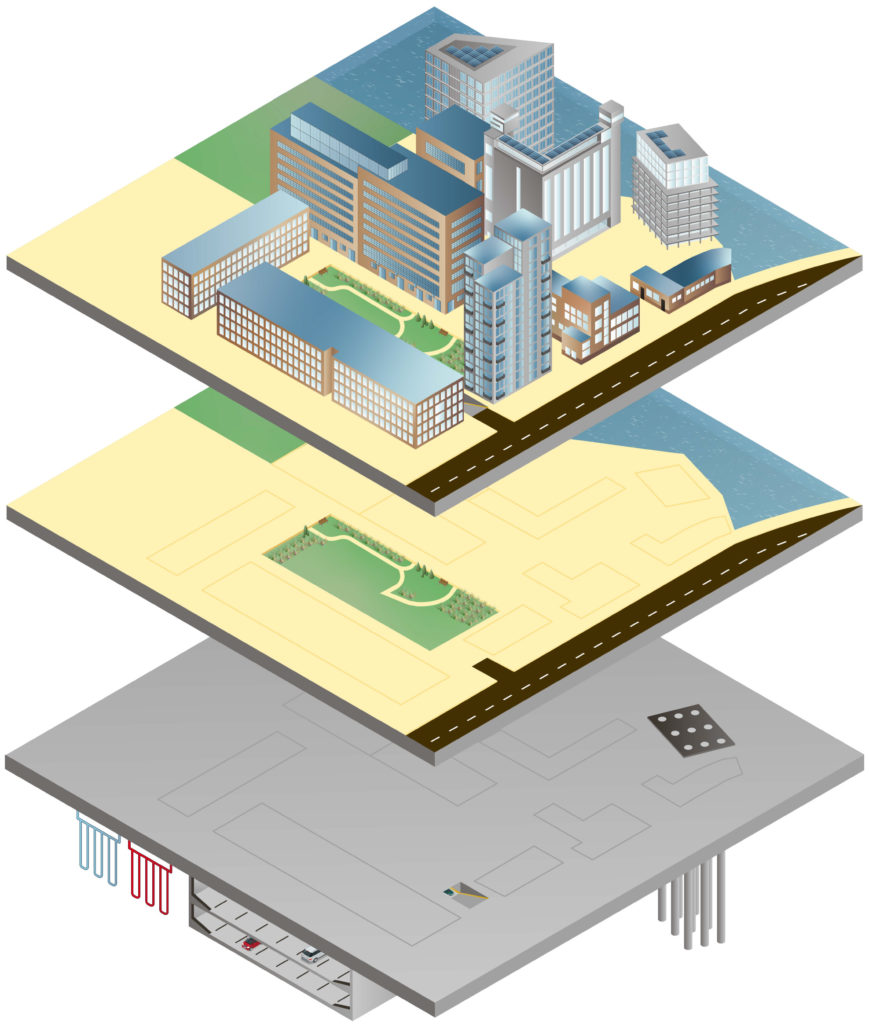
To minimise the number of vehicles at ground level, a three-storey underground car park has been created. It provides space for more than 300 vehicles belonging to residents, visitors and users of the offices, shops, hotel and Spa & Wellness facilities.
This approach frees up valuable space above ground for greenery, recreation and social interaction. As a result, De Meelfabriek Tuin can flourish at the heart of the site, while the development connects seamlessly with the Singelpark.
Where: Car Park, De Meelfabriek Tuin, Meelfabriek Plein
Double or triple glazing
At Meelpakhuis and Silotoren, the highest level of glazing performance has been selected: HR+++ glazing, also known as triple glazing. Across the rest of the development, at least HR++ glazing is applied.
For the heritage buildings, a careful balance is sought between improved insulation and the preservation of historic details. Where required, a very slim insulating glazing system filled with argon gas is used. This provides a significant improvement compared to conventional double glazing and especially compared to the original single glazing.
High-quality glazing reduces draughts, limits condensation and minimises external noise. At the same time, less heat is lost, helping to lower energy consumption.
Where: Molengebouw, Riffellokaal, Directiekantoor, Poortgebouw, Silogebouw, Schoonmakerij, Ketelhuis, Singeltoren, DUWO-gebouw, Silotoren, Meelpakhuis
Façade insulation
Façade insulation effectively adds an extra protective layer to a building. This helps retain warmth during colder periods while keeping excessive heat out during warmer weather.
In the heritage buildings, particular attention is paid to moisture management within the structure. Effective insulation must never lead to dampness or mould. Therefore, each building is carefully assessed to determine the most appropriate solution, taking into account both technical requirements and the preservation of architectural and heritage values.
The concrete Silogebouw, for example, is fully insulated on the exterior. This allows the industrial character of the hotel rooms to remain visible. In most other buildings, insulation is applied internally to preserve the character of the historic façades.
Where: Molengebouw, Riffellokaal, Directiekantoor, Poortgebouw, Silogebouw, Schoonmakerij, Ketelhuis
Roof insulation
Poorly insulated roofs can result in significant heat loss. At the same time, excessive heat can build up within a building during warmer periods.
For this reason, each building has been carefully studied to identify the most effective solution. In most cases, a substantial layer of insulation is installed above the existing roof. The round roof of Ketelhuis is the exception and is insulated internally in order to preserve its distinctive form and connection to the façades.
Good roof insulation reduces heat loss, limits the need for cooling and contributes to lower energy consumption. It also enhances comfort throughout the year.
Where: Molengebouw, Riffellokaal, Directiekantoor, Poortgebouw, Silogebouw, Schoonmakerij, Ketelhuis, Meelpakhuis
Floor insulation
Effective floor insulation provides both improved comfort and lower energy costs. While this is standard practice in new-build developments, heritage buildings require a more tailored approach.
At De Meelfabriek, the most suitable solution has been developed for each building. In Molengebouw, Riffellokaal and Meelpakhuis, for example, the floors have been slightly raised. This space accommodates building services while allowing the original ceilings of the floor below to remain visible.
The raised floor also provides insulation and incorporates both underfloor heating and cooling. These systems are supplied by sustainable heat and cold sources. As a result, energy loss is reduced and residential comfort is enhanced.
Where: Molengebouw, Riffellokaal, Directiekantoor, Poortgebouw, Silogebouw, Schoonmakerij, Ketelhuis, Meelpakhuis
Ground-source energy
A large part of De Meelfabrijk is heated and cooled using energy stored in the ground. To achieve this, closed-loop borehole fields have been installed, with pipes extending up to 200 metres below the surface.
A liquid circulates through these pipes and absorbs heat from the ground. Although the temperature difference is relatively small, this energy can be used continuously. It is then used to heat water to approximately 40 to 50 degrees Celsius, which is sufficient for underfloor heating.
During summer, the system works in reverse. Heat is extracted from the building and transferred back into the ground. The cooled water then returns to provide comfortable floor cooling.
This approach significantly reduces energy consumption while enhancing comfort throughout the year.
Where: Molengebouw, Riffellokaal, Directiekantoor, Meelpakhuis, Singeltoren
Low temperature heating
Many buildings in the Netherlands are still heated by radiators that use water at temperatures of 70 to 80 degrees Celsius. In well-insulated buildings, however, such high temperatures are no longer necessary.
All buildings at De Meelfabriek are insulated to a level that allows heating with water temperatures of just 35 to 55 degrees Celsius. These temperatures are supplied by heat pumps or ground-source energy systems.
For optimal performance, low-temperature heating requires a large surface area to distribute warmth. Therefore, all homes are fitted with underfloor heating as standard. In locations where this is not fully possible, such as the restored Directiekantoor, specially designed radiators suitable for low-temperature heating are installed.
Where: Molengebouw, Riffellokaal, Directiekantoor, Poortgebouw, Silogebouw, Schoonmakerij, Ketelhuis, Meelpakhuis, Silotoren, Singeltoren
LED lighting
LED lighting is used throughout both the buildings and the public spaces of De Meelfabriek. Compared to traditional halogen or fluorescent lighting, LED technology consumes significantly less energy.
In the car park, the lighting is also linked to occupancy and usage. As a result, energy is only consumed when and where it is needed.
Where: Molengebouw, Riffellokaal, Directiekantoor, Poortgebouw, Silogebouw, Schoonmakerij, Ketelhuis, Meelpakhuis, Silotoren, Singeltoren, DUWO-gebouw, Car Park, De Meelfabriek Tuin
SMART Monitoring of energy use
Insight into energy consumption encourages more conscious use of energy. At the same time, the impact of sustainable choices becomes immediately visible.
This information helps users actively apply and optimise energy-saving measures in their daily lives.
Where: Molengebouw, Riffellokaal, Directiekantoor, Silogebouw, Schoonmakerij, Ketelhuis, Meelpakhuis, Silotoren, Singeltoren, Car Park
Solar panels provide electricity
Solar panels convert sunlight into electricity. Although the technology has been known since the nineteenth century, it now plays a key role in sustainable energy generation.
Even on cloudy days, solar panels continue to produce electricity. However, energy yields increase when more sunlight is available. For this reason, the positioning of each installation is carefully considered.
Additional restrictions apply to heritage buildings. The historic appearance of the architecture must remain intact. Wherever solar panels can be installed without compromising the monument, they are incorporated into the design.
Where: Schoonmakerij, Ketelhuis, Silotoren, Silogebouw, Meelpakhuis
Solar shading
Sometimes energy savings can be achieved simply by reducing a building’s cooling demand. Solar shading makes an important contribution in this respect.
During summer, shading helps maintain a comfortable indoor climate by limiting direct solar heat gain. In winter, it can also improve comfort by acting as an additional buffer between inside and outside.
Where: Penthouses on Molengebouw-Riffellokaal, Meelpakhuis
SOLAR COLLECTORS FOR HOT WATER
Solar collectors capture sunlight and use this energy to produce hot water. This is achieved through a solar water-heating system within the building.
A solar boiler significantly reduces the amount of energy required for hot water. As a result, it provides a sustainable alternative to natural gas. In addition, solar energy produces no direct CO₂ emissions during use.
During periods with less sunlight, the system is supplemented by heat pump technology or ground-source energy systems.
Where: Schoonmakerij, Ketelhuis, Silotoren, Silogebouw, Meelpakhuis
heat recovery from ventilation air
Special ventilation units do more than supply fresh air and remove stale air. They also contribute to the building’s temperature regulation.
By transferring heat from outgoing air to incoming fresh air, less energy is lost. This creates a comfortable indoor climate while reducing overall energy consumption.
Where: Molengebouw, Riffellokaal, Directiekantoor, Poortgebouw, Silogebouw, Schoonmakerij, Ketelhuis, Meelpakhuis
Heat pump technology: energy from outdoor air
Ground-source systems are not possible everywhere. In those situations, heat pump technology is used to extract energy from the outside air and transfer it to water.
This technology converts low-grade energy into hot water at approximately 40 to 50 degrees Celsius. That is sufficient to efficiently supply underfloor heating. During summer, the system can also operate in reverse and provide floor cooling.
The efficiency of heat pumps has improved significantly in recent years. Today, they can be up to five times more efficient than a traditional gas-fired boiler. Consequently, they help reduce energy costs while improving comfort.
Where: Schoonmakerij, Ketelhuis, Silotoren, Silogebouw
Heat exchange roof
Special warm roofs have been developed to regenerate ground-source energy and cool the penthouse roofs. These systems can be compared to a form of underfloor heating integrated into the roof.
Sunlight warms the water circulating through the pipes. This heat is then used to recharge the ground for use during winter. At the same time, the system helps cool the roof surface.
As a result, solar energy is used more efficiently and the overall energy system remains in balance.
Where: Molengebouw, Riffellokaal
Green Energy Supplier
At De Meelfabriek, we aim to minimise energy consumption through efficient design and by reducing energy loss wherever possible.
The energy that is still required is sourced from our own sustainable systems whenever feasible. However, on-site generation alone cannot meet the entire demand. This is partly due to the limitations on installing solar panels and collectors on heritage buildings.
Any additional electricity is therefore purchased from suppliers that generate energy entirely from renewable sources, such as wind and solar farms.
Where: Molengebouw, Riffellokaal, Directiekantoor, Poortgebouw, Silogebouw, Schoonmakerij, Ketelhuis, Meelpakhuis, Silotoren, Singeltoren, DUWO-gebouw, Car Park, De Meelfabriek Tuin, Meelfabriek Plein
WATER RETENTION
As a result of climate change, periods of heavy rainfall and prolonged drought are becoming increasingly common. De Meelfabriek was designed with these challenges in mind from an early stage.
Beneath the entire garden and surrounding areas lies an integrated water-retention system. The roof of the underground car park forms the foundation of a large storage buffer, where rainwater is collected and retained.
Below the planting beds is a layer of crates filled with stone wool and a specially developed mix of tree sand, nutrients and lava stone. This system stores water and distributes it evenly throughout the landscape. Consequently, the plants continue to receive sufficient moisture, even during dry periods.
Rainwater from both the garden and the surrounding buildings feeds the system. When water levels become too high, excess water is gradually discharged into the Singel. During drier periods, the garden can draw on the stored reserves.
Where: De Meelfabriek Tuin
EV charging in the car park
The underground car park has been prepared for a large number of charging stations for both residents and visitors.
Residents can choose a charging point when purchasing a parking space. Additional charging facilities can also be added at a later stage. Thanks to the pre-installed infrastructure and conduit systems, this can be done with minimal intervention.
Future energy demand has also been taken into account. A smart energy-management system distributes available capacity efficiently across all charging points. Naturally, only renewable electricity is used.
Where: Car Park
Electric boat
As a sustainable alternative to road transport, an electric boat is available at De Meelfabriek.
At present, it can be hired for events and group outings. Meanwhile, opportunities are being explored to give electric water transport a more permanent role within the wider De Meelfabriek experience.
Where: Singelkade
GAS FREE
Although natural gas still plays an important role in heating, hot water and cooking across the Netherlands, the number of gas-free homes continues to grow each year.
De Meelfabriek is already anticipating this transition. Not only the new-build elements, but also the national heritage monuments are being equipped with sustainable alternatives to natural gas.
Electric heating is only truly sustainable when the electricity itself is generated sustainably. For this reason, De Meelfabriek combines renewable energy generation with energy-saving measures and highly efficient building systems.
At the same time, every effort is made to minimise overall energy demand. This reduces the need for purchased electricity and ensures that renewable energy sources are used as effectively as possible.
Where: Molengebouw, Riffellokaal, Directiekantoor, Poortgebouw, Silogebouw, Schoonmakerij, Ketelhuis, Meelpakhuis, Silotoren, Singeltoren
Bicycle hire
Bicycles are already available to entrepreneurs travelling into the city and to visitors wishing to explore Leiden and its surroundings.
With the arrival of the hotel and the continued development of the site, demand for bicycles is expected to increase further. As a result, this healthy, practical and sustainable mode of transport will remain an important part of the facilities on offer.
Where: Meelfabriek Plein
Stronger together
Sustainability at De Meelfabriek is reflected not only in the buildings and technology, but also in the people and businesses that bring the site to life.
Entrepreneurs with a sustainable outlook are a natural fit for the character of the development. In turn, De Meelfabriek provides an environment in which these businesses can thrive. Local products are already used in the coffee bar and gift shop, while other tenants include an electric mobility provider, a tailoring workshop that offers an alternative to fast fashion, and a range of creative and innovative enterprises.
In addition, we believe that the development of both body and mind contributes to a more sustainable way of living. That is why De Meelfabriek provides ample space for sport, wellness, art and culture.
Where: Entire site