
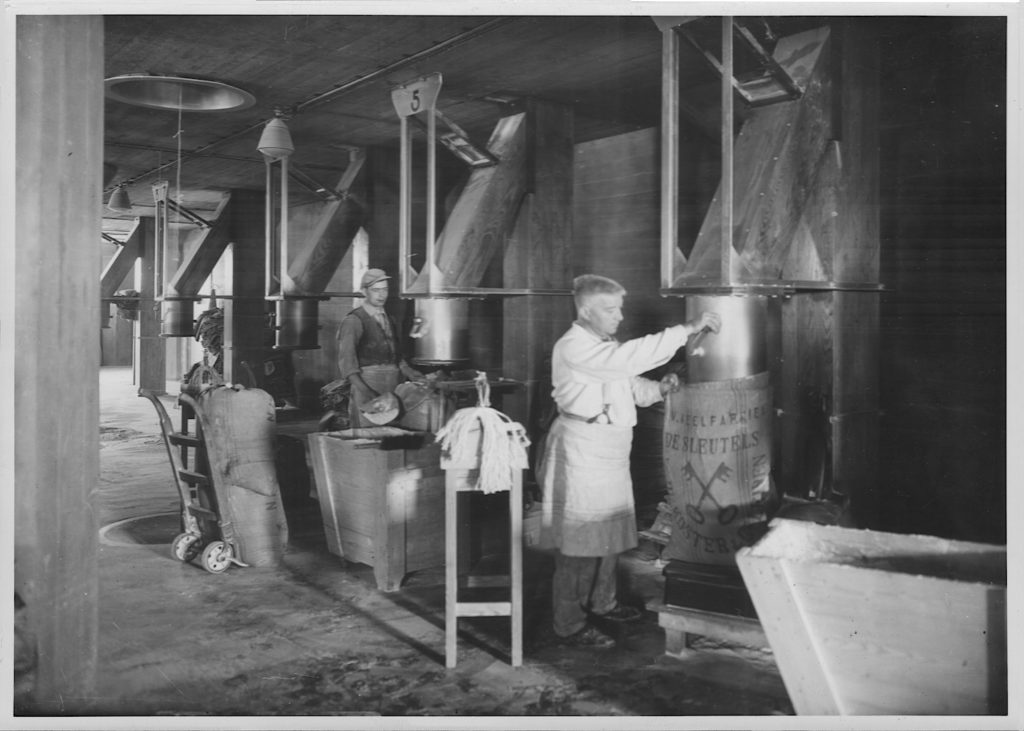
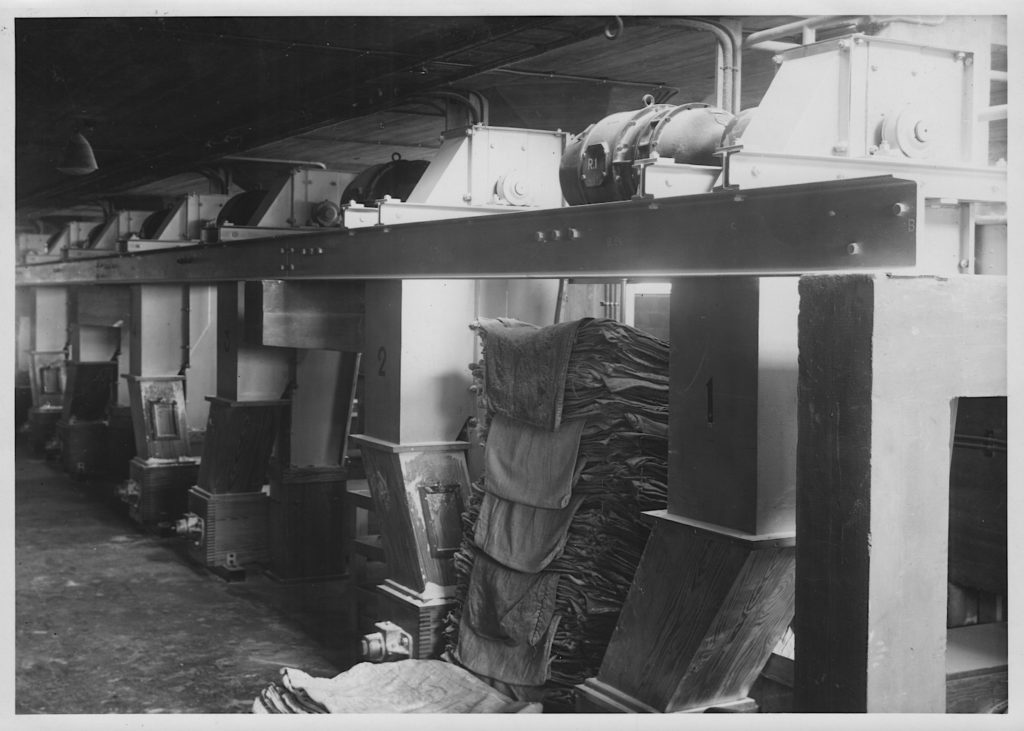
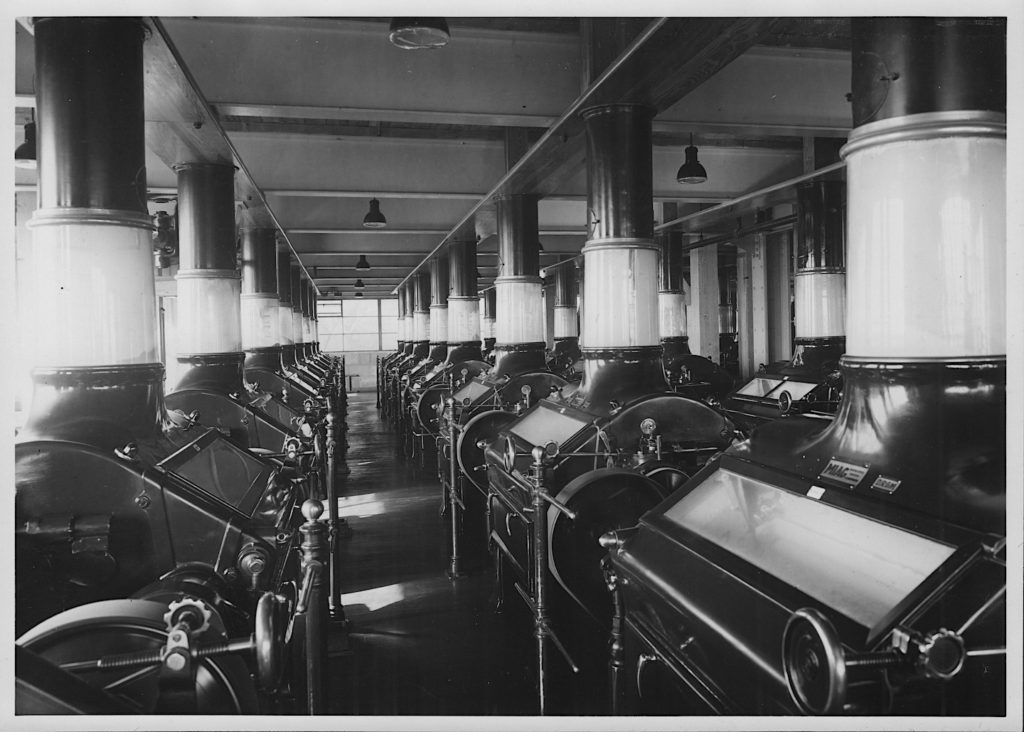




De Meelfabriek is an industrial complex comprising several large buildings. Flour used to be produced here, with the various types of grain brought in by boat along the nearby canals. The flour mill was established in 1884, but closed in 1988 for economic reasons.
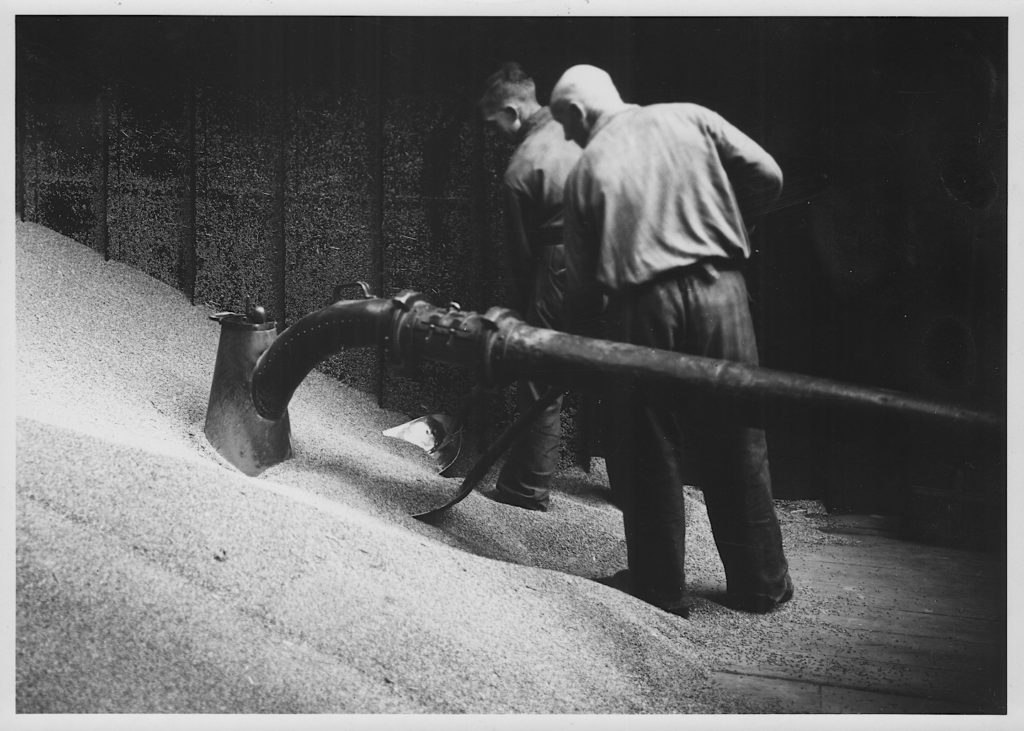
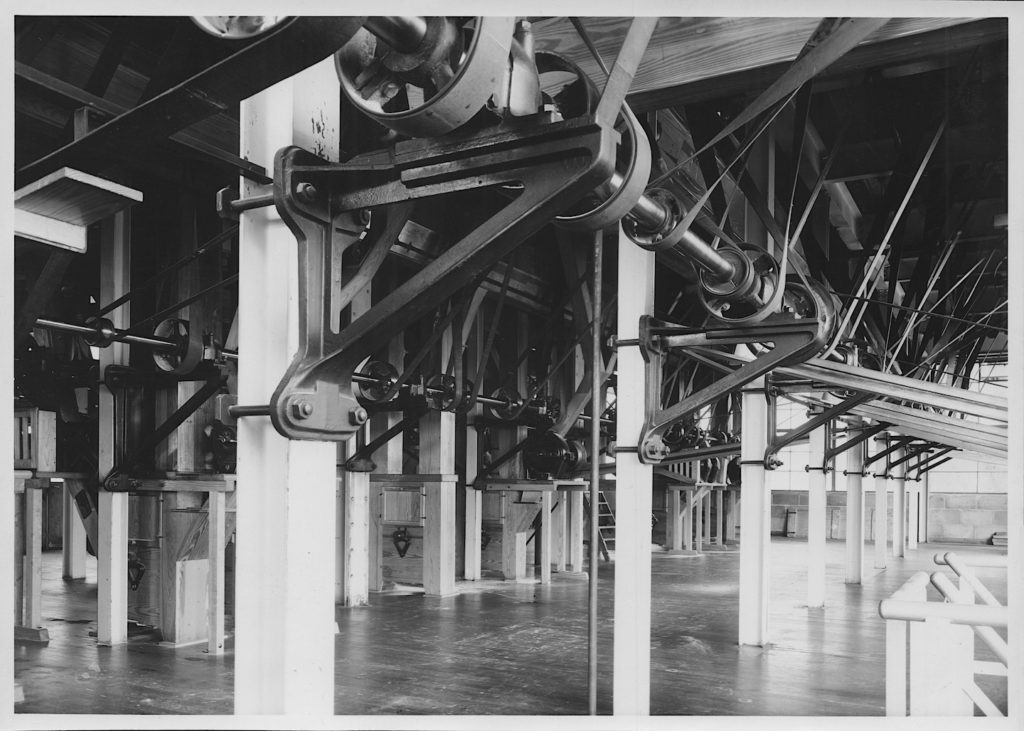
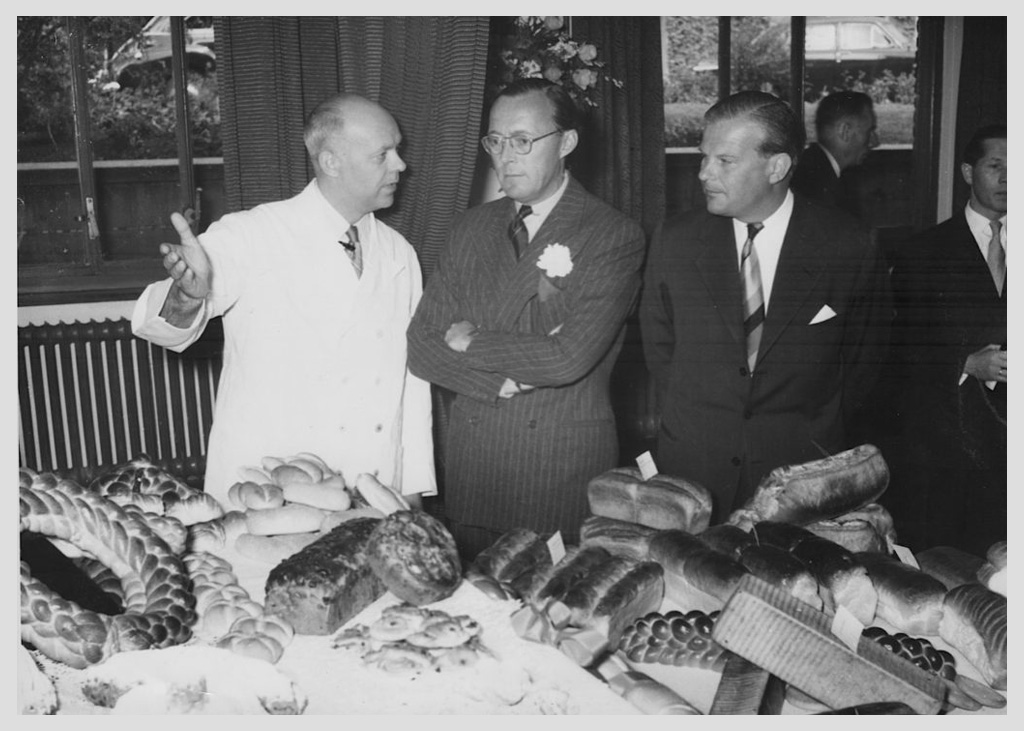
In its day, the factory was a state-of-the-art steam-driven facility. The company embraced the latest technologies, including pneumatic grain unloading systems and electric lighting, making it one of the first businesses in Leiden to do so. After the Second World War, the mill went through a period of great prosperity. By the late 1950s, 150 production workers were producing 420 tonnes of flour daily, enough to make 750,000 loaves of bread. This level of production met some 20% the demand of the Dutch population for flour.
The buildings stand on a former bastion that once formed part of Leiden’s historic fortifications. Originally this was an empty strip of land surrounding the entire city, but it was turned into an industrial area during the nineteenth and twentieth centuries. Much of this industrial development disappeared during the late twentieth century.
At the time when the mill was finally closed down, there was little interest in redeveloping or reusing the site, so Leiden city council was in favour of total demolition of the factory buildings. Property developer Ab van der Wiel purchased De Meelfabriek, convinced of the importance of preserving and redeveloping industrial buildings. The complex is now one of the most important remnants of Leiden’s rich industrial past and many of its buildings have been designated national heritage monuments.
Today, De Meelfabriek is one of Leiden’s most significant historic landmarks and an important example of Dutch industrial heritage.
Bij een grootschalig project als De Meelfabriek is samenwerking van groot belang. We zijn dan ook dankbaar voor onze trouwe partners:
Hylkema Erfgoed – Nationaal – Restauratiefonds – Rijksdienst voor het Cultureel Erfgoed – Provincie Zuid-Holland